iXperience / Information Experience, 2015–2021
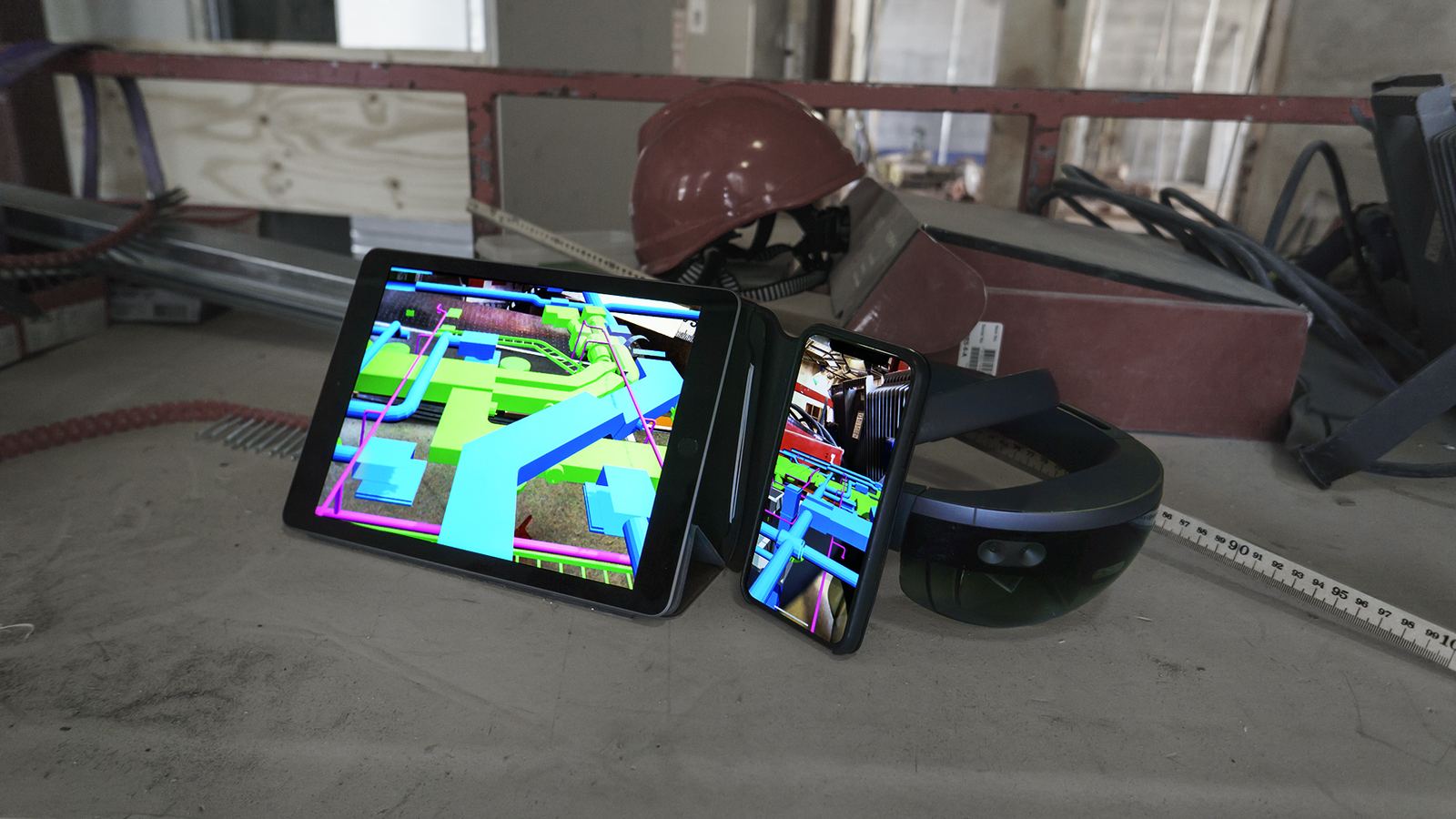
Information Experience AB was founded in 2015 and wound down in 2021. It was a small software company in Stockholm that built apps and cloud services to make 3D data usable as a working tool rather than as presentation material.
The stated aim was to put relevant information in the right place at the right time, so that the digital dimension reaches the first-line worker in the field. With enough understanding of how information moves through a construction process, you can help contractors build safer sites, achieve better build quality, improve inspection, and produce accurate quality documentation.
Underneath, it was a database company. We built a semantic layer that we — or the client — could build on, as an alternative to being locked into a vendor’s schema. The headsets were the part people saw.
The projects
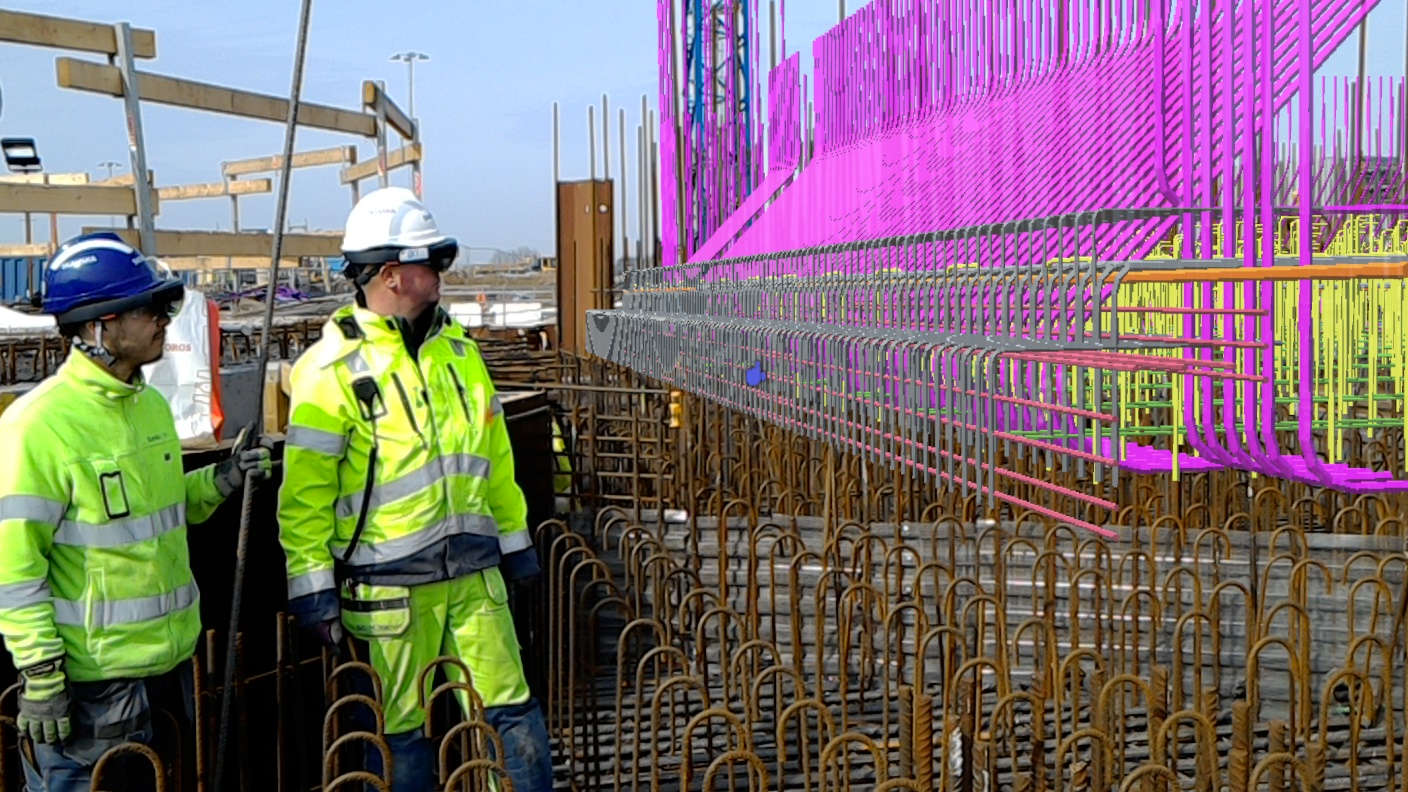
Rebar placement, Skanska / ESS Lund, 2017. A pilot in which reinforcement positions were shown at 1:1 scale through HoloLens, registered to the physical site with a marker, with completion written back to a central database in the same flow. Stated precision 5–10 cm — often better, but that was the number we were willing to stand behind.
Precast concrete elements, 2018. The same principle moved indoors, where lighting and geometry are controlled. The benefit was measurable in a way it had not been on site: fewer scrapped elements, and inspection faster than the manual method.
Indoor navigation for Coop, 2020–2021. Technology partner to Peppy Pals on an AR recipe scavenger hunt for children in grocery stores, built on Azure Spatial Anchors with image tracking for the initial position fix.
Digital twins from 2D and 3D drawing sets. A cloud service for generating and validating project models automatically, viewable on iPad, HoloLens and HoloLens 2 / Trimble XR10. Funded by Vinnova under Innovativa Startups Steg 2.
BIM Planner. Site model with phasing, crane radii and logistics, reviewed around a conference table instead of on a screen.
The hardware
All of the field work was done on the first generation HoloLens. It stayed in service the whole way, from the first tabletop models in 2016 to the last projects.
Two Trimble XR10 units — a hard-hat-integrated HoloLens 2, the only device in this story built explicitly for construction sites — were bought just before the pandemic and never made it onto one. They are still on a shelf.
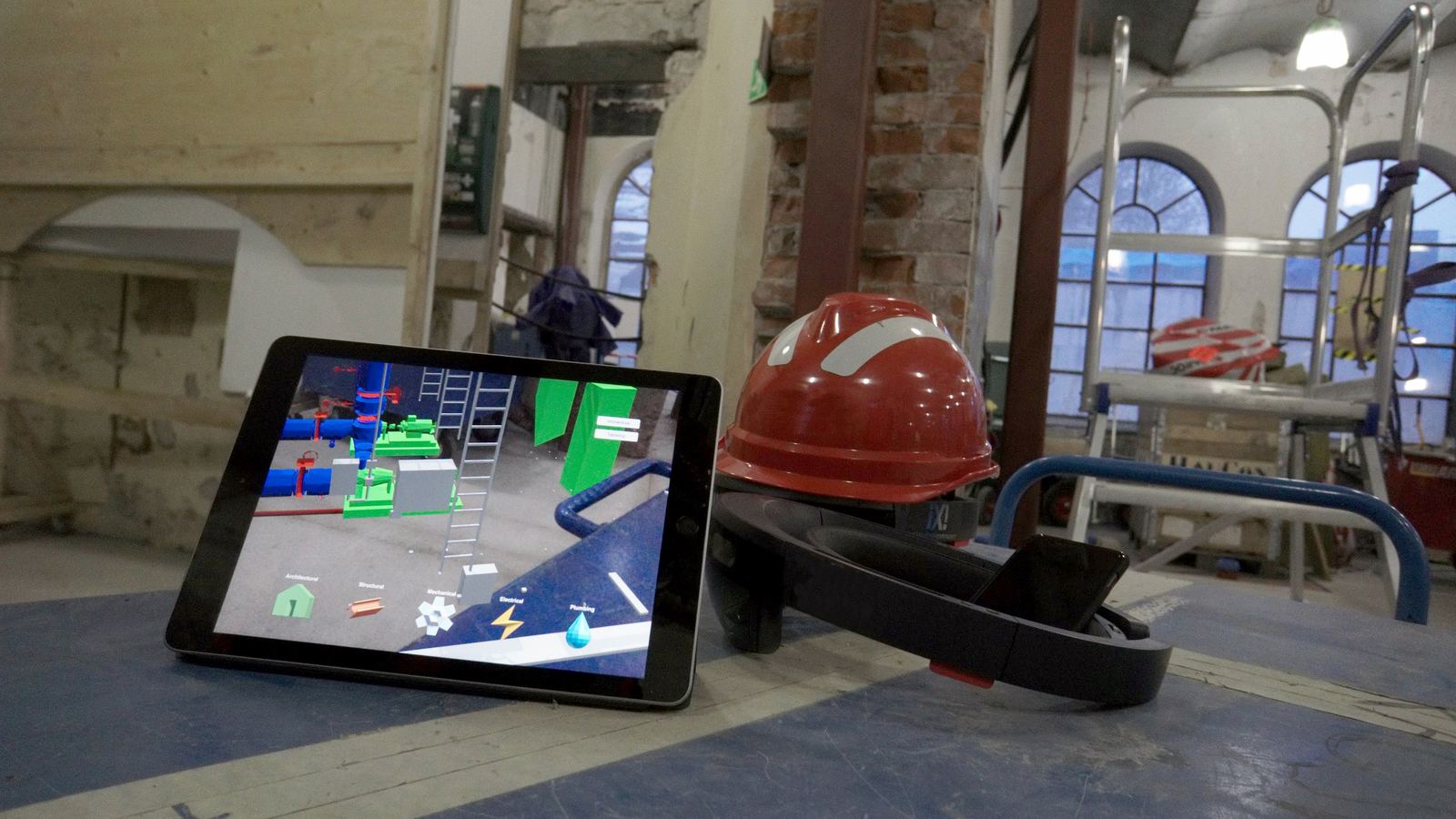
My judgement is that the outcome would have been only marginally better when viewed on the XR10 with HoloLens 2. The field of view was wider and it was more comfortable to wear, but registration against the room — the thing that decided whether the method was good enough — was the same problem on both generations. Two hardware generations apart, same limitations. That says something about where the bottleneck actually sat — and to this day no other option really comes close.
What held up, and what did not
What held up was registration. Getting a model to stay still relative to a room is the hard part — not rendering, not model size. A model that drifts is not a worse drawing; it is not a drawing at all, because you cannot measure against it.
What did not hold up was the assumption that keeping data current is a technical problem. Generating a model automatically is tractable. Keeping it true while the building changes requires somebody to own that work, and that is an organisational question no application settles.
The company wound down in 2021. The work continued in another form: the same problem, different technology and scenery.