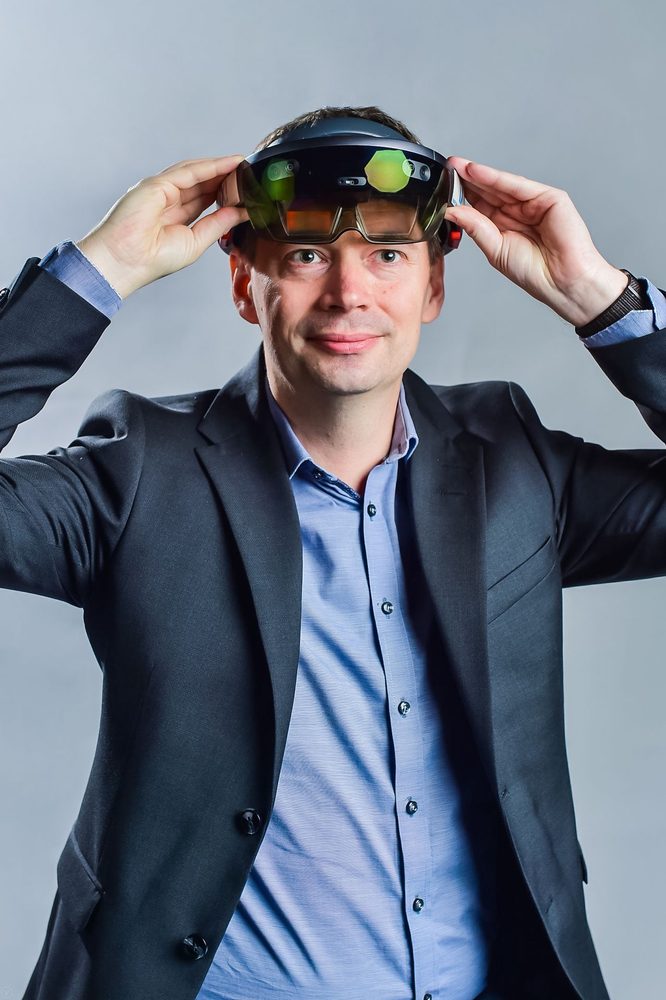
I work on getting computers to understand physical space: where things are, what they are, and how you know the description is still true tomorrow.
For twenty-five years that has looked like several different jobs. Information architecture in large organisations — Skanska, the Swedish Government Offices. Then a company of my own, Information Experience, which built augmented reality for the construction industry between 2015 and 2021: rebar placed against a hologram instead of a paper drawing, digital twins generated from existing drawing sets, indoor navigation in retail. Now applied computer vision.
The through-line has not changed even as the hardware did. Reality is messy, and the information we hold about it is almost always fresher in one place than another. The question I keep returning to is who keeps the map true, and what that costs.
Since 2021 the work has been inside a research setting where most of it stays in the building. What is collected here is therefore the older material — projects that are finished and can be described. The current work will surface when it is ready.
This section is the technical half, written for people working on the same problems; the Swedish side carries more of the case material.
Writing
- The life of a litter bin A 2018 lifecycle test of a new classification system, run on a city square, and the part of the problem it left open.